Church Buildings & Heritage
The Digital Vestry: When Church Records End Up Everywhere
Why churches may be among the few organisations where moving records online can sometimes create as many problems as it solves.
Spire & Stone · 8 min read
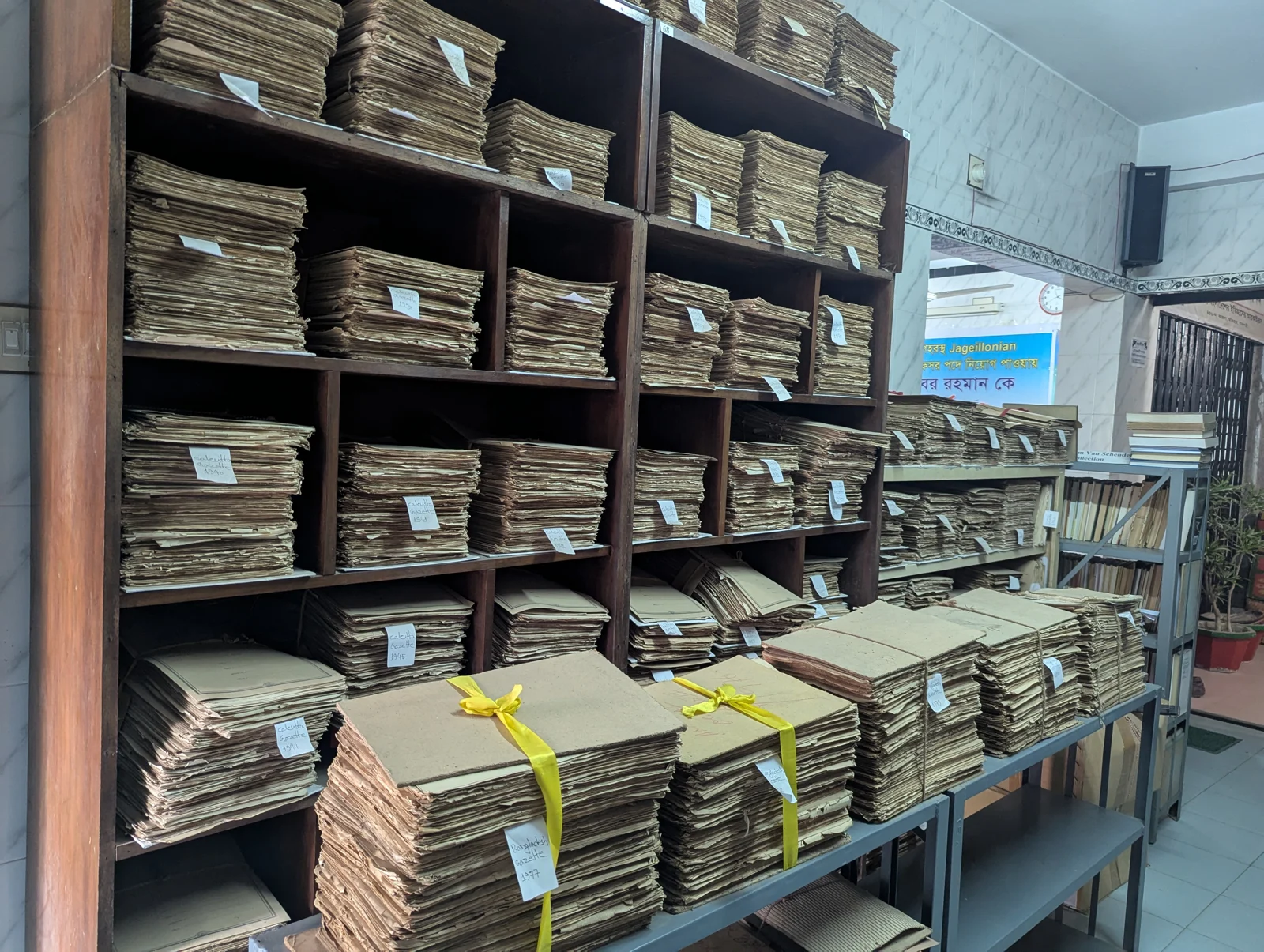
Once upon a time, the church's records were kept in a filing cabinet in the vestry.
It wasn't necessarily the most sophisticated system.
But at least everybody knew where the filing cabinet was.
Now the electrical certificates are in the churchwarden's Gmail account.
The contractor's quotation is in somebody else's Outlook.
The roof photographs are in a WhatsApp group.
The faculty approval is somewhere on a shared drive.
And the latest architect's drawing is called FINAL-final-USE-THIS.
We've digitised the information.
We haven't necessarily organised it.
And for churches, that can create a rather unusual problem.
Churches have a very different relationship with time
Most organisations are concerned about retaining records for years, perhaps decades.
Churches can find themselves needing information from a century ago.
Sometimes much longer.
The decisions made by one generation can affect the work undertaken by another several generations later.
A repair carried out in the Victorian period might still be relevant to a project today.
An old deed can affect what a parish is entitled to do with its land.
A previous faculty approval may explain why a particular alteration was made.
And a historic contractor's record might provide information that would otherwise require expensive investigation.
This is institutional memory on a rather different scale.
Which makes the way churches store information surprisingly important.
The bell contractor who remembered the 1870s
We recently had a conversation with a specialist contractor about proposed work involving a church's bells.
During the telephone call, the contractor asked for details of the church.
There was a brief pause.
Then the unmistakable click clack of a keyboard in the background.
And suddenly, an answer.
"Ah yes, we can see that..."
What followed was a description of work and equipment associated with the church dating back to the 1870s.
There were details of what had been supplied and information that could help establish the current arrangement.
The records had survived for approximately 150 years.
And somebody had made them accessible through a modern information system.
It was an extraordinary example of institutional memory being preserved and made genuinely useful.
Not simply collecting historic paperwork.
Actually using the information to inform work being undertaken today.
That's what good digitisation can achieve.
The red ribbon at the back of the safe
There's another story that illustrates the other side of the same issue.
We were trying to establish the whereabouts of some missing church deeds.
There were references to the documents in older correspondence, but nobody seemed to know where the original deeds had gone.
Eventually, while examining a substantial collection of historic paperwork, we found a letter dating from the 1930s.
It was correspondence between the churchwarden and the vicar.
And in that letter was a rather useful piece of information.
The churchwarden explained that the deeds had been placed at the back of the church safe, tied with a red ribbon.
So somebody went to investigate.
At the back of a large Victorian safe, after a rather thorough search, were the deeds.
Still there.
Still tied with the same red ribbon.
Approximately ninety years later.
Now, that's quite an impressive filing system.
Not necessarily because it was technologically advanced.
But because the information had been retained, the original correspondence had survived and there was a central location where the important documents could eventually be found.
Imagine trying to reproduce that experience if the only record of the deeds had been an email sitting in the personal account of a churchwarden who retired in 1998.
The problem isn't digitisation. It's fragmentation.
Digital information offers enormous advantages to churches.
People can work from home.
Volunteers can contribute without visiting the vestry.
Professional advisers can review documents remotely.
Several members of the fabric committee can access the same building information.
A document that once required somebody to find a key and drive to the church can now be opened in seconds.
That's progress.
But only if the information remains accessible to the organisation.
The trouble begins when different people create different systems.
The churchwarden has a personal Google Drive.
The treasurer uses OneDrive.
The fabric committee has an email archive.
The contractor sends photographs through WhatsApp.
The architect uses a document sharing service.
And somewhere, somebody has a memory stick containing drawings from a project completed ten years ago.
The information might all exist.
But collectively, the church has no reliable system for finding it.
Digitisation has simply moved the filing cabinets into different people's houses.
Volunteers come and go. Buildings remain.
This is where churches face a particular risk.
Much of their administration and building management depends on people giving their time voluntarily.
Those people may remain involved for many years.
They acquire remarkable knowledge of the building.
They remember the contractors, the defects, the decisions and the reasons projects were approached in particular ways.
But eventually, responsibilities change.
People retire.
People move away.
New churchwardens are appointed.
Fabric committees change.
And sometimes the institutional knowledge disappears with the person who held it.
A traditional filing cabinet at least had the advantage of remaining in the vestry.
An online system tied to somebody's personal account may not.
The important distinction is between information belonging to an individual and information being properly held by the church.
One home for the information
The solution doesn't necessarily require expensive software or a complicated digital transformation programme.
Start with one central, church controlled location for the information.
That might be an appropriately managed shared drive.
Establish a straightforward structure covering building reports, maintenance, compliance, permissions, drawings, projects and decisions.
Make sure the right people have access.
Use clear document names.
Keep a record of which drawings and documents are current.
And, importantly, make sure somebody else can find the information without having to telephone the person who originally uploaded it.
Sensitive records should have appropriate access controls, backups and retention arrangements.
The Church of England's Information and Records Management guidance is an excellent reference. It covers paper and electronic records, retention, archiving and legal responsibilities.
Not everything needs to be kept forever.
But the things that do need preserving should be managed accordingly.
Keep the decisions, not just the documents
There's something even more useful than knowing what work was undertaken.
Knowing why.
Why did the church repair one part of the roof but leave another?
Why was a particular heating system selected?
Why was a previous proposal rejected?
Why did the PCC agree to defer an expensive project?
If the relevant advice, decisions and correspondence survive, the next generation can understand the history.
Otherwise, the same investigation may be commissioned again.
The same options may be reconsidered.
And the same expensive mistakes may be repeated.
Good information management doesn't just preserve documents.
It preserves the reasoning behind decisions.
Where FaithSpaces fits
For smaller churches, a properly managed shared drive and a few simple registers may be sufficient.
But as building responsibilities become more complicated, it can help to bring information, maintenance tasks, projects and decisions into one structured system.
That's the purpose of FaithSpaces.
FaithSpaces is a church building and project management platform designed to help parishes manage their building information, maintenance requirements, documents and projects in one place.
Its value isn't simply digital storage.
It's creating a more coherent record of what has happened, what has been agreed and what needs doing next.
That matters enormously for continuity.
A new churchwarden should be able to understand the building without spending six months reconstructing its history.
And the next fabric committee shouldn't need to begin every project by discovering where the previous committee stored the information.
The digital vestry should be better than the old one
There's nothing inherently wrong with the old vestry filing cabinet.
In some circumstances, it was remarkably effective.
The challenge is to preserve the best thing about it.
One place where people knew the records could be found.
Digital systems can offer far greater accessibility, better organisation and easier collaboration.
But those advantages only materialise if the information is properly managed and remains within the control of the church.
The bell contractor's records demonstrate what's possible.
The red ribbon reminds us what's worth preserving.
The objective isn't simply to digitise the filing cabinet. It's to ensure that the church's institutional memory survives for the next hundred years.
At Spire & Stone, we help churches establish practical systems for managing building information, maintenance, projects and decisions. If your church's records are scattered across different accounts and people's memories, we'd be pleased to help bring them together.