Church Buildings & Heritage
Before You Can Apply for a Church Building Grant, There's Another Project to Do
Why getting ready to apply for funding can sometimes feel almost as complicated as carrying out the building project itself.
Spire & Stone · 10 min read
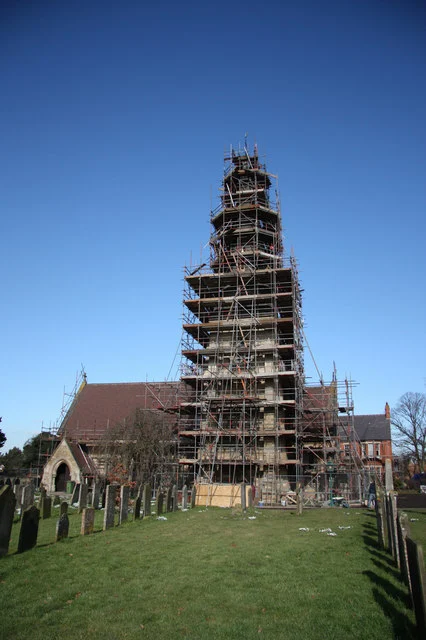
Your church needs £100,000 to repair its roof.
You discover a grant funder that supports church building repairs.
Excellent.
All you need now is a clearly defined project, a reliable budget, evidence of need, suitable prices from contractors, the relevant permissions, a realistic programme, information about your organisation's finances and a convincing explanation of why the work matters.
And that's only half the story.
Because alongside explaining what the building needs, you may also need to demonstrate why the building matters.
Who uses it? How often? What activities take place? How many people benefit? And what would the community lose if the building could no longer support those activities?
Oh, and the application deadline is next Friday.
Suddenly, you're faced with a rather uncomfortable realisation.
Before you can even apply for the grant, you've got another project to deliver.
Welcome to the wonderful world of getting grant ready.
The application is often the easy bit
There's a common misconception that obtaining grant funding is mainly about completing the application form.
Find the right funding programme.
Answer the questions.
Upload a few documents.
Press submit.
Hopefully receive a cheque.
If only.
For many church building projects, the real challenge comes before the application can even begin.
The funder wants to know what you're proposing to do, why the work is necessary, what it will cost and whether the organisation has the ability to deliver it.
Those answers might require input from an inspecting architect, structural engineer, specialist contractor, diocesan adviser or several different professionals.
And somebody needs to coordinate all of it.
For a church managed largely by volunteers, that can become a considerable undertaking.
First, what exactly are you asking the funder to support?
"Our church roof needs repairing."
That's a perfectly reasonable starting point.
But it's not necessarily a developed project.
Does the roof need patching, partial renewal or complete replacement?
Is the problem caused by the covering, the flashings, the drainage or something else entirely?
Is there underlying timber damage?
How will contractors access the work?
Are there conservation considerations?
What permissions will be needed?
Until those questions have been considered, the church may not have a sufficiently clear scope of work to establish a reliable cost.
And without a reliable cost, it becomes difficult to prepare a credible funding application.
The first stage is therefore often a programme of investigation, advice and project definition.
Which, rather inconveniently, costs money.
Don't just describe the building. Describe the life inside it.
It's easy for a church building grant application to become entirely focused on stonework, roof coverings, rainwater goods and structural defects.
But a church is more than a collection of building materials.
It's a living, working part of its community.
Beyond Sunday worship, there may be a nursery operating five days a week, Scouts and Guides, community lunches, support groups, concerts, exercise classes, food banks or activities for older residents.
How many people attend these activities? How many different organisations use the building? How many volunteers contribute their time? How many hours each week is the building serving its community?
Often, nobody has brought that information together.
Yet these figures can become some of the most compelling evidence in a funding application.
Start with the basics. Speak to the groups using the building. Review hall bookings. Establish typical attendance figures, how frequently activities take place and who benefits.
Consider not just the number of people attending, but what those activities actually achieve. Social connection, education, practical support, opportunities for young people and reducing isolation can all form part of the wider story.
There are also tools, including the National Churches Trust's social value calculator, which can help churches estimate the wider economic and social value of their activities.
That exercise can produce a surprisingly powerful picture of what an individual church contributes to its community.
Of course, the numbers need to be credible. Weekly attendances aren't necessarily unique individuals, and estimated social value isn't money sitting in the parish bank account.
But the exercise helps turn a general statement about being an important community building into something measurable and persuasive.
It can also help answer a question that isn't always obvious from the building specification alone.
What will this investment actually protect, sustain or make possible?
A roof repair might safeguard a busy community venue. An accessible entrance might allow more people to participate. Improved heating could extend the hours during which activities can take place.
The physical work and the community benefit are two parts of the same story.
The building may be the subject of the grant application, but the people who depend on it are often the reason the project matters.
Preparing that evidence deserves just as much thought as preparing the building specification.
The cost of being allowed to ask for money
This is one of the more frustrating aspects of church building funding.
An organisation with limited reserves may need to commission professional advice before it knows whether it will receive any financial support.
Surveys, specialist investigations, drawings, technical specifications and cost advice can all become necessary.
The temptation is to avoid that expenditure until funding has been secured.
Unfortunately, some funding programmes require much of the information before they will consider the application.
This is where a proportionate approach matters.
Don't commission every possible report simply because somebody has suggested it might be useful.
Start by identifying what the funder actually requires, what information the church already holds and what needs to be prepared.
The difference can be substantial.
Talk to the funder before commissioning everything
A useful first step is often a short eligibility enquiry.
Explain what the church is trying to achieve, where the project currently stands and what preparation has already been undertaken.
Ask whether the programme might be suitable.
Check what evidence will be needed.
And importantly, ask whether there is a funding route for preliminary investigations or project development.
The National Churches Trust provides information about grant programmes supporting eligible church building projects.
The National Lottery Heritage Fund also offers funding routes for appropriate heritage projects, including programmes with development stages.
These aren't interchangeable funding sources. Their objectives, eligibility rules and assessment requirements differ.
Some funders may be particularly interested in the significance and condition of the historic fabric. Others may place greater emphasis on community benefit, accessibility, participation or the future sustainability of the building.
Understanding those priorities early can help the church prepare the right evidence.
The point is to establish whether a project is likely to fit before spending valuable church funds preparing a submission.
You probably have more information than you think
Churches often already hold a surprising amount of relevant information.
There's a quinquennial report.
An architect may have prepared some sketches.
Previous contractors have submitted prices.
Photographs have been taken.
The PCC has discussed the project.
There may even have been an unsuccessful application in the past.
And on the community side, there are likely to be hall booking records, attendance information, lists of user groups, newsletters, volunteering records and photographs of events.
The problem is finding everything and establishing whether it's still current.
Start by gathering the information into one project folder.
Identify what can be reused, what needs checking and what is missing.
A simple list of outstanding information might include a current scope, updated prices, relevant drawings, permissions, project budget, PCC approval, supporting financial documents and evidence of community use.
And each outstanding item should have a next action.
Somebody needs to obtain the quotation.
Somebody needs to speak to the DAC.
Somebody needs to establish the likely programme.
Somebody needs to contact the community groups for attendance figures.
Somebody needs to check whether the funder will accept the current cost estimate.
This is where preparing for a grant application starts to look remarkably like project management.
Because it is.
Don't prepare the information twice
There's a further opportunity here.
Much of the information required for a grant application will also be needed to deliver the project.
A clear scope of work will help contractors understand what they're pricing.
Drawings and specifications may support permissions and approvals.
Cost information will underpin the project budget.
And the evidence gathered about community use and social value can support future grant applications, fundraising campaigns and conversations about the church's wider role.
Properly prepared documents shouldn't exist simply to satisfy a single grant application.
They should become a useful resource for the church itself.
That means getting more value from the time and money spent preparing them.
A shared drive can help maintain that information. FaithSpaces is another option, providing a church focused platform for organising building information, project records and funding activity in one place.
The aim is to avoid starting from scratch every time an application deadline appears.
And then there's Church Standard Time
You may have identified the perfect grant.
The deadline is six weeks away.
That sounds manageable.
Except the inspecting architect is unavailable for three weeks.
The specialist contractor needs to visit before providing a price.
The next PCC meeting is after the application deadline.
And the DAC may need to provide advice on the proposed works.
Meanwhile, you're still trying to establish how many people use the building each week, whether the nursery can provide attendance figures and who has the latest version of the project budget.
Some of these stages can run alongside one another. Others depend on earlier decisions.
The answer is to prepare a realistic programme and work backwards from the funding deadline.
If the project isn't ready, the next funding round may be more achievable.
A rushed application based on inadequate information can be a poor investment of volunteer time.
Is there a more economical way to get grant ready?
Sometimes.
Professional advice can be essential, particularly for significant conservation work.
But it may be possible to reduce costs by making better use of information already held, preparing the parish's own supporting documents and obtaining advice only where it adds value or is required.
A modest preliminary appointment can help identify which work genuinely needs commissioning and which can wait.
There may also be opportunities to use existing professional relationships, volunteers or appropriately supervised student work for certain preparatory tasks.
And gathering the community evidence is often something the parish itself can contribute to, with a little guidance about what to collect and how to present it.
The objective isn't to avoid professional expertise.
It's to make sure the church is buying the right expertise at the right stage.
How Spire & Stone can help
At Spire & Stone, we help churches get into a position where they can make credible funding applications.
That involves two parallel tasks.
The first is developing the building project: understanding the work required, reviewing existing information, obtaining appropriate professional advice, establishing costs and identifying the necessary permissions.
The second is developing the case for support: understanding who uses the church, documenting its community activities, measuring attendances, exploring social value and explaining what the proposed investment will protect or make possible.
We can help identify appropriate funding opportunities, coordinate the preparation work and bring the supporting information together into a coherent, proportionate funding submission.
And because the information has been prepared with the future in mind, it can continue to support the church's wider fundraising, planning and project delivery.
A good grant application doesn't simply explain why a building needs money. It explains why that building is worth investing in.
Sometimes a little independent help bringing those two stories together can make an enormous difference.
If your church has a building project that isn't yet ready for a funding application, talk to Spire & Stone about the practical steps needed to get there.