Church Buildings & Heritage
Faculty Applications: What Can Your Church Do Itself?
Understanding when a parish can prepare the paperwork, when it needs professional help and why an early email to the DAC might be the most useful thing you do.
Spire & Stone · 10 min read
There's an awkward moment in church building projects when somebody asks whether you have permission for the work.
Particularly when you've already ordered the doors.
Or booked the contractor.
Or announced to the congregation that work starts next Monday.
The much cheaper version of that conversation happens while the doors are still a sketch.
For Church of England parishes, the faculty system plays an important role in protecting church buildings, their contents and churchyards.
It can also appear rather intimidating to somebody dealing with it for the first time.
The good news is that preparing a faculty application doesn't necessarily mean handing every aspect of the process over to an architect or consultant.
But that doesn't mean professional advice is optional whenever the parish feels confident.
The skill is understanding the difference.
First, send an email to your DAC
Before producing complicated drawings or commissioning expensive reports, consider doing something remarkably simple.
Send your Diocesan Advisory Committee team an email.
Explain what you're trying to do.
Attach a few photographs.
Describe why the work is necessary.
If you have a preliminary sketch or outline scope, include it.
Ask what permissions are likely to be needed and what information the committee would expect to see.
The DAC isn't simply an obstacle to be negotiated after the design is complete.
It exists to advise parishes on the care and alteration of their buildings.
Early conversations can help identify potential problems, clarify the appropriate approval route and avoid unnecessary expenditure.
This is consistent with the Church of England's guidance on alterations and extensions, which recommends consulting the DAC at the outset.
A lesson from a set of historic gates
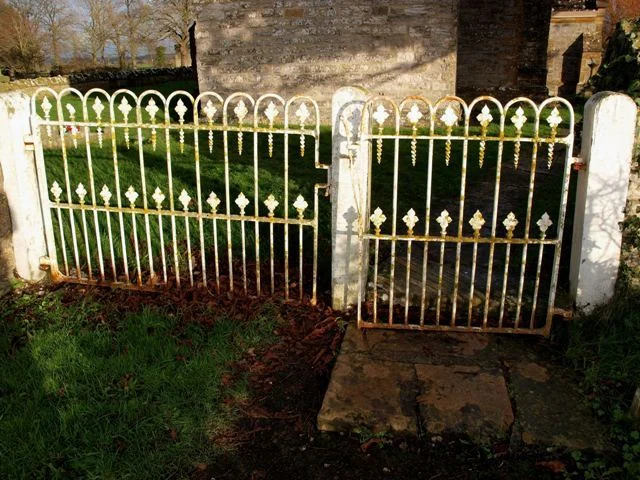
We recently encountered an interesting situation involving proposed repairs to historic iron gates set within a listed boundary wall.
When reviewing the relevant List B provisions, we noticed that the wording referred specifically to listed railings.
The gates presented a slightly different question.
Rather than attempting to exploit a narrow interpretation of the wording, we discussed the proposal with the DAC.
The eventual conclusion was that proceeding through a full faculty was the appropriate route.
Now, that might sound like an unnecessary complication.
But here's the interesting part.
We had already undertaken much of the preparatory work.
There was a defined repair requirement, supporting photographs and information, and the groundwork needed to obtain prices and consider funding.
Much of that information could be used to support the faculty application.
The change was principally to the approval process and programme, rather than starting the technical preparation again from scratch.
And the conversation meant everybody understood the route before work was commissioned.
Sometimes a slightly more involved approval process is considerably less troublesome than trying to find a shortcut around it.
List A, List B or a full faculty?
The Church of England faculty system includes different routes depending on the proposed work and applicable rules.
List A identifies specified works that may be undertaken without obtaining faculty permission, provided the conditions are met.
List B covers specified works that require written authorisation from the archdeacon.
Other works may require a full faculty through the diocesan consistory court.
Additional Matters Orders and particular diocesan requirements can also affect the route.
The important point is that the appropriate process depends on the work, its context and the heritage significance of what is affected.
A relatively modest repair can have significant conservation implications.
Equally, certain routine maintenance activities may not need a full faculty at all.
When in doubt, ask.
The Church of England's Building Management Portal is the national digital system for managing List A, List B and faculty applications.
Who actually prepares the application?
In many cases, the parish itself coordinates or submits the application.
The incumbent and churchwardens are normally central to the formal application on behalf of the PCC, with appropriate parish authorisation.
That doesn't mean they personally need to draw every plan, prepare every technical specification or write every specialist report.
Different people can contribute different elements.
For many projects, parish representatives can assemble photographs, background information, evidence of need, existing reports, PCC decisions and initial project descriptions.
They may also be able to prepare initial sketches or supporting statements.
The appointed professionals can then concentrate on the technical and conservation matters that require their expertise.
There's no particular virtue in paying somebody professional rates to assemble information the parish already has.
There is, however, considerable value in paying the right professional to exercise judgement when that judgement is needed.
Do you always need to use your inspecting architect?
Not necessarily.
Your quinquennial architect or surveyor knows the building and should be an important source of advice, particularly where the proposed work relates to defects or recommendations they have identified.
For some projects, involving them will be the most sensible and efficient approach.
But the Church of England explicitly recognises that a parish can appoint another architect for alteration and extension work.
Different projects require different skills.
A substantial masonry conservation project may call for specialist conservation experience.
A relatively straightforward improvement to an ancillary space may have different design requirements.
There can be advantages in obtaining alternative proposals or competitive professional fees.
The parish should discuss the appointment and relevant competence requirements with the DAC, particularly where significant historic fabric is involved.
The objective isn't to bypass the inspecting professional.
It's to ensure the project has the right professional support.
Don't underestimate the resources already available to your church
Churches often have a remarkable range of skills within their congregations and wider communities.
There may be architects, engineers, designers, retired construction professionals or people with experience of preparing plans and documentation.
We've even benefited from university students contributing drawings and preparatory work through their courses.
Where the task and supervision are appropriate, this can provide genuinely useful information.
Measured drawings, early layouts, photographs, research and other preparatory work may all help a parish develop its proposal.
But competence and accountability matter.
Student drawings and informal assistance are not automatically suitable as final technical designs. Structural design, statutory compliance, conservation specifications and other specialist responsibilities still need to be undertaken or checked by appropriately competent professionals.
A helpful volunteer isn't a substitute for necessary professional appointments.
But neither should a church overlook the skills and goodwill available to it.
One set of information can serve several purposes
Here's an opportunity that's frequently missed.
The information you're preparing for a faculty may also be needed for contractor pricing, grant applications and project delivery.
A clear scope helps contractors understand the work.
Drawings identify what's proposed.
Photographs establish the existing condition.
Statements of Need help explain why the project matters.
Professional advice can support both the permissions process and the technical specification.
A well managed project should bring those requirements together wherever possible.
The aim isn't to prepare a separate mountain of paperwork for every organisation involved.
It's to develop one coherent project with the necessary supporting information.
Different organisations may need different forms or supporting statements.
But much of the underlying evidence should be reusable.
Church Standard Time and Local Authority Standard Time
There's Greenwich Mean Time, British Summer Time and, for those of us involved in church projects, Church Standard Time.
It is a curious arrangement in which six weeks can pass between agreeing to obtain a quotation and the next meeting at which somebody is available to discuss it.
But church governance isn't the only consideration.
Faculty applications can involve professional advice, DAC meetings, consultations, public notices and formal decisions.
Some stages have statutory requirements and cannot simply be shortened because a contractor happens to be available next Tuesday.
Then there's Local Authority Standard Time.
External alterations, access improvements and other works may also require planning permission or building regulations approval.
Local authorities have their own validation processes, consultations, statutory timescales and decision making arrangements.
Some applications proceed relatively smoothly.
Others can take considerably longer than anybody initially expected.
And if the parish is relying on a grant deadline or a contractor's availability, those delays can have real consequences.
The answer is to recognise the different processes early, identify which can run alongside one another and build a realistic programme.
You don't necessarily need every approval before starting to investigate or design a project.
But you do need to understand which approvals are required before particular commitments or works can proceed.
A DAC notification of advice, for example, is not the same as a faculty authorising the works.
Check what the permissions will actually cost
Here's another area where churches can sometimes save money.
List B applications generally do not attract a formal application fee, although the local diocesan arrangements should always be checked.
For full faculties, the arrangements vary. Some dioceses meet the relevant fees on behalf of parishes, while others require the parish to pay.
Professional preparation costs are a separate consideration.
And if planning permission is required, don't automatically assume the standard fee applies.
In England, applications relating solely to providing access for disabled people to or within a building open to the public can qualify for exemption from the statutory planning application fee.
That might be relevant, for example, where a church is proposing a new accessible entrance or ramp.
It doesn't apply simply because the applicant is a charity, and an application incorporating unrelated works may not qualify.
Check the current rules with your local planning authority before submission. Separate submission service charges may still apply.
There is useful information in the Planning Portal's guidance on application fees and exemptions.
The savings on any individual application may not transform the parish finances.
But churches have enough demands on their funds without paying charges they don't need to pay.
Don't mistake simplicity for a lack of responsibility
None of this is an argument for avoiding professional advice, statutory duties or proper conservation processes.
Historic buildings deserve appropriate care.
A parish should not undertake technically complex work based on inadequate drawings or unsupported assumptions.
And the faculty system is not something to be circumvented through clever interpretations of the rules.
The better approach is to understand the work, seek early advice, prepare useful information and appoint specialists where their expertise is needed.
That can be both economical and entirely compatible with good governance.
How Spire & Stone can help
At Spire & Stone, we help churches define projects, prepare supporting information, coordinate professional advice and establish the necessary permissions and approval programmes.
We can help bring together drawings, specifications, quotations, PCC decisions and funding information so that the parish isn't repeatedly preparing the same material for different purposes.
Sometimes this involves coordinating substantial conservation projects.
Sometimes it's helping a church understand the process for a relatively modest repair.
The objective isn't to make the faculty application the project. It's to make the faculty application a manageable part of delivering the project.
And sometimes, the best place to start is an email to the DAC.
If your church has a project in mind but you're not sure which permissions or professional appointments are needed, talk to Spire & Stone.