Church Buildings & Heritage
Water: The Greatest Enemy of Historic Buildings
Why a slipped slate or blocked gutter can become the most expensive small problem in your church.
Spire & Stone · 8 min read
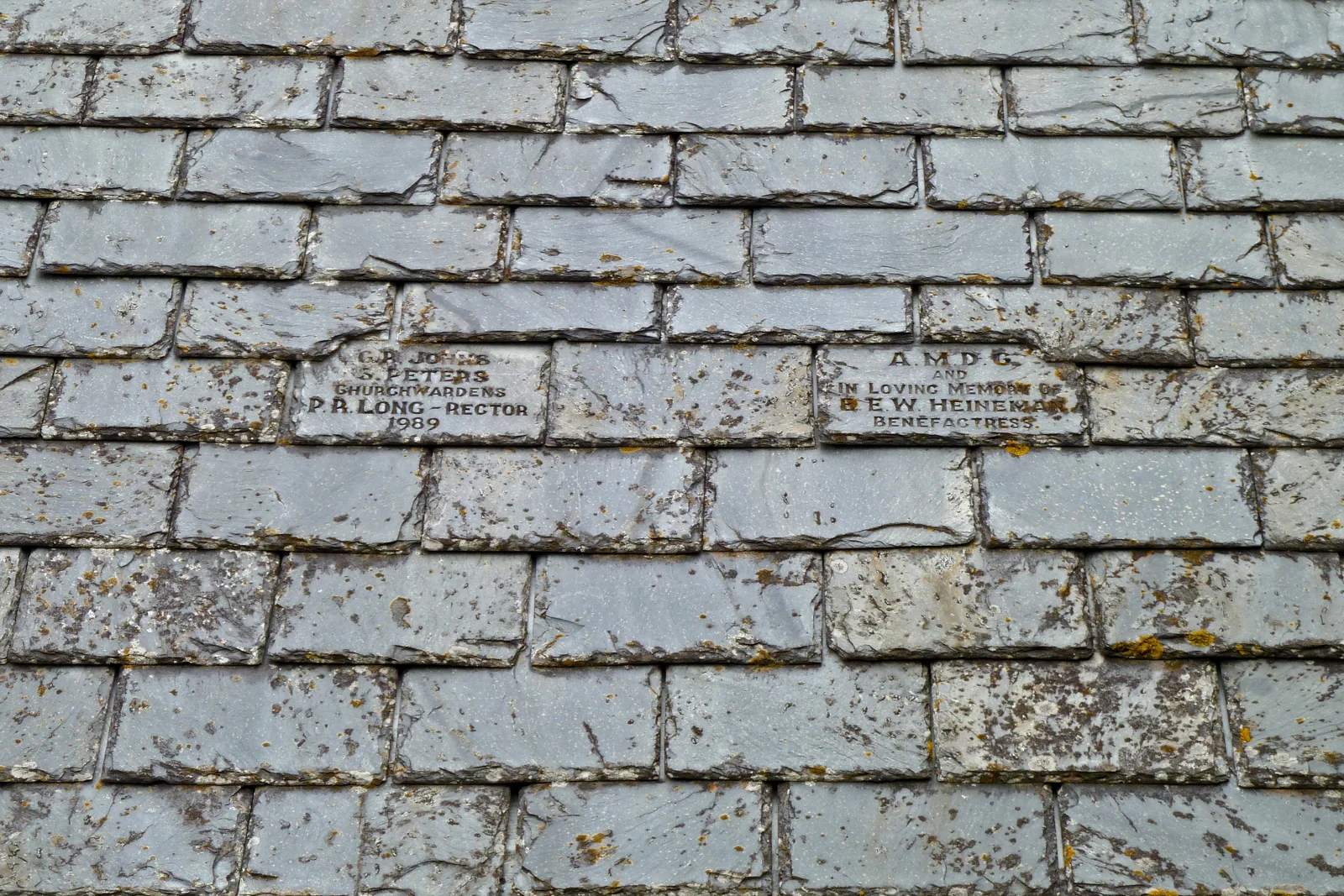
Church buildings have survived wars, changing congregations, alterations, extensions and, in some cases, several hundred years of British weather.
But there's one thing that can cause extraordinary damage if left unchecked.
Water.
Not necessarily a dramatic flood.
Sometimes it's a blocked gutter.
A slipped slate.
A failed section of lead flashing.
A leaking downpipe that quietly saturates the masonry.
Or a small patch of damp that everybody has noticed but nobody quite knows what to do about.
The problem with water is that it rarely improves if you ignore it.
And in a historic building, the damage caused by a modest leak can eventually become far more expensive than the original repair.
A small leak can become an enormous problem
Water has an unfortunate habit of refusing to remain confined to the part of the building where it first appeared.
A failed gutter joint may allow water to saturate stonework.
Persistent dampness can damage plaster, timber, internal decorations and historic finishes.
Water entering roof spaces may affect structural timbers and building services before anybody notices what's happening below.
And by the time a significant damp patch becomes visible inside the church, the original defect may have been developing for months.
Historic England's research into maintenance and repair across a sample of 30 listed churches found that delayed repairs were associated with increases in estimated costs of between 15% and 20% compared with addressing defects when first identified.
Those figures relate to the buildings studied, rather than representing a universal prediction.
But the principle is clear.
Neglected maintenance can turn relatively modest defects into substantial conservation problems.
You can read the research in Historic England's Maintenance and Repair of Places of Worship.
Sometimes you need a battlefield medic, not a plastic surgeon
This is an important distinction when dealing with active water ingress.
There's a time for carefully developed conservation specifications, specialist materials and permanent repairs.
But there's also a time for stopping the building from getting any wetter.
If a slate has slipped, a gutter has failed or a small opening is allowing water into the building, the ideal permanent repair may take time to arrange.
There may be professional advice to obtain.
Permissions to consider.
Contractors to approach.
Prices to compare.
Funding to secure.
And, as anybody involved in church buildings will recognise, Church Standard Time can make a relatively straightforward repair take rather longer than anticipated.
Meanwhile, it's still raining.
Sometimes what the building needs first isn't a plastic surgeon.
It's a battlefield medic.
Somebody competent who can safely stabilise the situation and prevent further damage while the proper repair is organised.
A temporary repair can be a very sensible repair
There can be an understandable reluctance to use temporary materials on historic buildings.
And rightly so where those materials could damage significant fabric or make the permanent repair more difficult.
But temporary weatherproofing isn't inherently poor conservation practice.
Historic England's own maintenance guidance recognises temporary flashband repairs to leadwork as an example of reactive maintenance.
Depending on the location and circumstances, appropriate temporary protection might include a small removable waterproofing patch, a suitable covering or another targeted measure to limit water ingress.
Self adhesive waterproofing products and sealants may have a role in certain circumstances, but they must not be applied indiscriminately to historic stonework, lead, decorative surfaces or vulnerable materials.
Some products can leave residues, stain surfaces or cause damage when removed.
The method should be selected by someone competent who understands the materials involved.
High level roofing work must also be undertaken with safe access and appropriate precautions.
And where faculty permission or specialist advice is needed, that should be addressed promptly with the relevant diocesan advisers.
The principle is not to abandon conservation standards.
It's to recognise that allowing water to continue entering a building can itself be damaging.
A suitable temporary repair that prevents further deterioration may be considerably more valuable than a perfect permanent repair that cannot happen for another three years.
Just make sure temporary really does mean temporary.
Give the permanent repair a next action.
Don't overlook the simplest ways of monitoring a leak
Suppose a damp patch has appeared on the wall.
You're not sure whether it's getting bigger.
You take a photograph.
A fortnight later, you take another.
Now you're comparing two photographs taken at different angles and wondering whether the stain has grown or whether the light is simply different.
There's a remarkably straightforward alternative.
If the surface is an ordinary, sound painted finish and it is safe to mark, lightly trace the outside of the stain with a pencil or chalk and write the date beside it.
Not a felt tip pen.
Not a permanent marker.
Your decorator will have some fairly colourful things to say about that.
The important qualification is that historic plaster, wall paintings, decorative finishes and other sensitive surfaces should not be marked. Use photographs with a consistent reference scale instead, and obtain appropriate conservation advice.
But where a light pencil or chalk mark is harmless and suitable, this simple technique can make it much easier to see whether the affected area is expanding.
Has the stain spread beyond the original line?
Has it remained stable?
Has the wall dried after a repair?
You're no longer relying entirely on memory.
And the exercise costs practically nothing.
You've already got a recording system in your pocket
Most people have a smartphone.
You don't need to establish an elaborate water ingress database every time somebody notices a damp patch.
Take a photograph.
Send it to the people responsible for the building.
"Water coming through near the north aisle window. First noticed today after heavy rain."
Now you've got a date, a photograph and the beginning of a conversation.
If the problem gets worse, send another photograph.
If a temporary repair is arranged, record what's been done.
If the next action is to obtain a contractor's advice, make sure somebody knows they're responsible.
A simple WhatsApp conversation can be extremely useful for keeping the relevant people informed.
For continuity, the important photographs, decisions and repair information should subsequently be retained in the church's central records rather than relying permanently on individual phones.
The objective is to capture enough information to understand what's happening.
Not generate another administrative burden.
Understand where the water is coming from
Of course, stopping an active leak is only part of the solution.
The permanent repair should address the cause.
Water entering a building doesn't necessarily appear immediately beneath its source.
It can travel along masonry joints, roof timbers and hidden surfaces before becoming visible.
A damp patch on a wall might originate from a defective gutter some distance away.
Equally, not every moisture problem is a roof leak. Condensation, drainage defects and inappropriate previous repairs can also contribute.
The right response is to investigate the cause with competent advice, then develop a repair suitable for the building.
This is particularly important with traditional materials, where inappropriate impermeable treatments can sometimes make moisture problems worse.
Gutters aren't glamorous. Neither is a collapsing ceiling.
Ask a congregation what improvement they'd most like to see and you may hear suggestions involving heating, lighting, toilets or a new kitchen.
You're unlikely to hear enthusiastic requests for gutter maintenance.
It's difficult to get excited about a downpipe.
Nevertheless, keeping water away from the building is one of the most effective ways of protecting historic fabric.
Historic England recommends regular clearance of gutters, gullies, downpipes and drains, with particular attention after autumn leaf fall and before winter weather.
The frequency and access arrangements should reflect the building, its surroundings and its actual condition.
A competent maintenance contractor may be entirely appropriate for routine clearance.
You don't necessarily need a specialist conservation professional to remove leaves from a gutter.
But you do need someone who can reach it safely and avoid damaging the building.
Stabilise, investigate, repair
For many water related problems, there is a sensible sequence.
First, make the situation safe.
Next, take appropriate action to prevent further deterioration.
Then establish the cause and organise a suitable permanent repair.
There's no conflict between good conservation and practical maintenance when those steps are undertaken responsibly.
Historic buildings deserve proper specialist repairs.
They also deserve not to be left deteriorating simply because nobody can organise the perfect solution quickly enough.
How Spire & Stone can help
At Spire & Stone, we help churches assess building defects, coordinate professional advice, obtain prices and establish practical repair programmes.
That might involve a small maintenance issue or a substantial conservation project.
We can also help develop ongoing maintenance arrangements so that problems are identified and dealt with before they become major repairs.
Sometimes the most valuable thing you can do for a historic building isn't particularly elegant. It's simply stopping the water from getting in.
If your church has a persistent leak, deteriorating roof or unresolved water ingress problem, talk to Spire & Stone about getting it under control.